On the autumn mountain,
the rising hues of purple feel dear to me—
the smoke of charcoal fires
rising toward the distant peaks.Wakayama Bokusui

Local Walks &
Attractions

The writer Kaizan Nakazato, in his novel Daibosatsu Tōge, praised the scenery of Shirahone Onsen as "a landscape of five brilliant colors that captivates the eye."

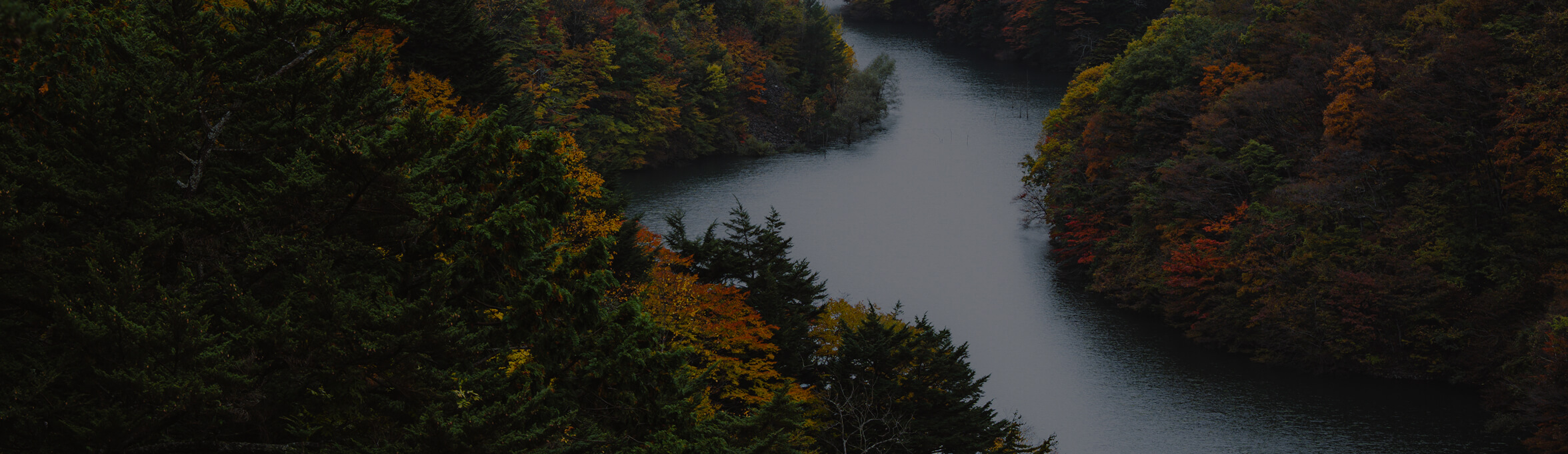
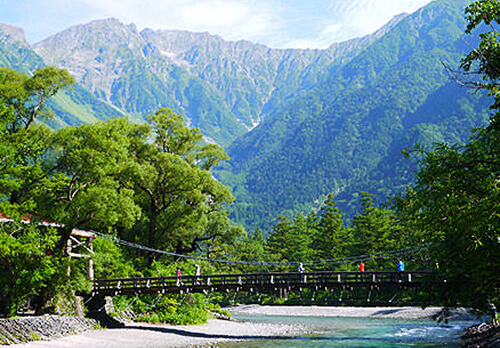
Set in a valley of purple mountains and clear waters, the scenery changes with each of the four seasons.

After your bath, we invite you to take a leisurely walk through the surrounding area.
Look up toward Mount Norikura, take in the forests of beech and oak, and listen closely to the sound of the clear mountain streams.
At night, to gaze up at the star-filled sky while returning once more to the hot springs is a pleasure in itself.

Embraced by the majesty of nature,
discover the richness of simplicity.

“When we finally arrived at the hot spring village of Shirahone and looked back toward Konashidaira, even Oyuki found that the fear she had felt earlier faded away before the beauty of the scene.

“Tashō no Maki” (The Scroll of Former Lives), Daibosatsu Tōge (The Great Bodhisattva Pass) by Kaizan Nakazato

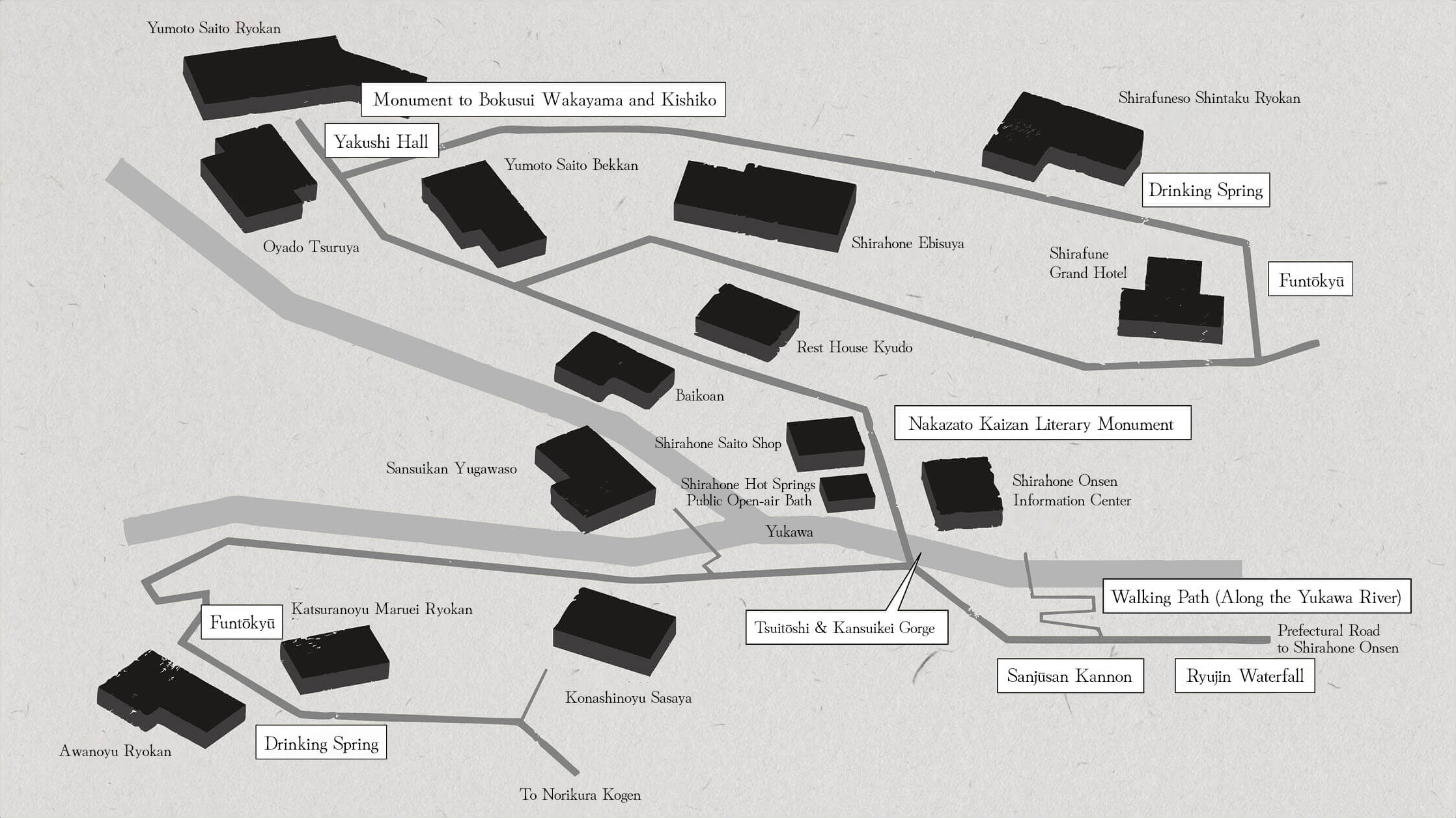
Attractions Within Shirahone Onsen

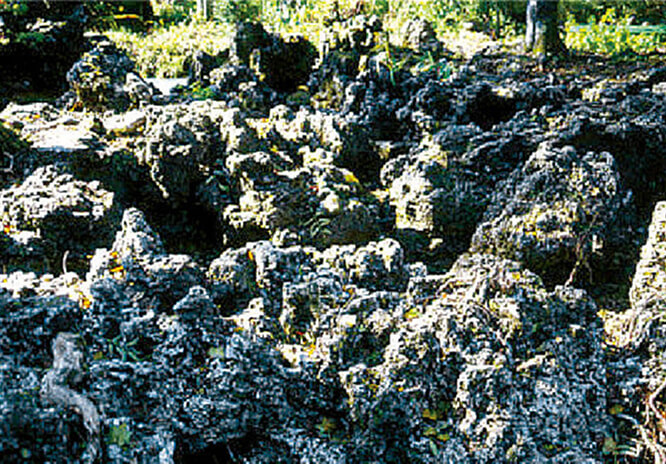
  • Funtōkyū (Hot Spring Mound) & Spherical Limestone

    Approx. 8-minute walk from the Shirahone Onsen Tourist Information Center

    The hot spring waters of Shirahone Onsen are rich in calcium carbonate.
    Over thousands of years, mineral deposits accumulated at the points where the water emerged, forming layered hot spring mounds known as funtōkyū.
    Among these deposits are extremely rare spherical limestone formations, found in very few places worldwide.
    Because of their geological value, this site has been designated a National Natural Monument of Japan.

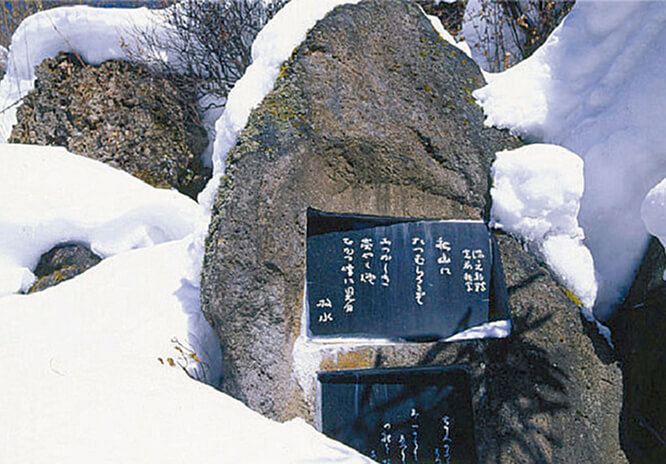
  • Monument to Bokusui Wakayama and Kishiko

    Approx. 15-minute walk from the Shirahone Onsen Tourist Information Center

    "Having journeyed deep into a mountain gorge, I feel, again today, a quiet kinship with the hot spring water welling up from the bare slope of the hill."
    — Bokusui Wakayama

    The poet Bokusui Wakayama was one of the many cultural figures who held Shirahone Onsen in deep affection.
    The poem above was composed during his stay at a bathhouse here and later carved into stone.
    The monument still stands today in Shirahone Onsen, preserving his words.

    In his travel writings, Wakayama frequently wrote of Shirahone Onsen.
    While journeying through places such as Kamikōchi and Hirayu, he is said to have stayed here to ease digestive fatigue.
    His essays vividly convey the quiet, secluded atmosphere of Shirahone Onsen during the Meiji and Taishō eras, when it was known as a rustic hidden hot spring.

    “Shirahone Onsen in Shinshu lies halfway up the northern slope of Mount Norikura, at an elevation of about five thousand shaku.
    There are four hot spring inns, two soba shops, and one general store—seven establishments in total—forming a small mountain hamlet.
    Mail is carried over a mountain path from the thriving village of Shimashima at the foot of the mountain, taking a full day to arrive.
    Situated midway along steep mountain slopes, the settlement is surrounded on all sides by deep forest.
    One can hear the fierce sound of the stream, though it cannot be seen.
    Recommended by a friend as beneficial for digestive ailments, I stayed there for nearly a month.”
    from Trees and Their Leaves: Hot Springs Around Volcanoes by Bokusui Wakayama

    After Wakayama passed away, it is said that his wife Kishiko visited Shirahone Onsen alone, returning to the place where memories of her husband remained.

    About Bokusui Wakayama
    Born in 1885 (Meiji 18), Bokusui Wakayama was a prominent Japanese poet of the prewar era.
    His given name was Shigeru.
    He married Kishiko in 1912 and had four children—two sons and two daughters.
    His major works include the poetry collections Sabishiki Jumoku (“Lonely Trees”), as well as the travelogue Minakami Kikō (“Travel Notes of Minakami”).
    He passed away in 1928 (Shōwa 3).

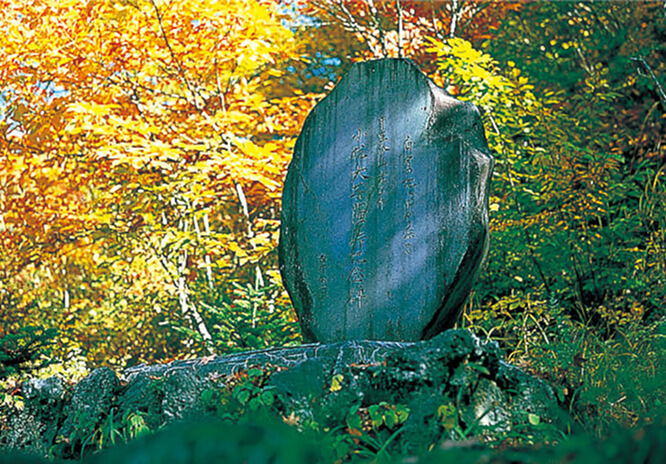
  • Nakazato Kaizan Literary Monument

    Approx. 1 minute on foot from the Shirahone Onsen Tourist Information Center

    It was the writer Nakazato Kaizan who brought Shirahone Onsen to public attention. In his lifelong historical epic Daibosatsu Tōge, scenes set at Shirahone Onsen appear. At the time, this hot spring area was also called “Shirafune,” but after Nakazato rendered it as “Shirahone,” the name became established and the place rose to prominence.

    Daibosatsu Tōge is set in the closing years of the Edo period. A monumental work centered on the blind swordsman Tsukue Ryūnosuke, possessed by nihilism, it portrays the course of his wandering journey beginning at Daibosatsu Pass in Kai Province, along with the various ways of life of those around him. The novel was serialized over approximately thirty years, from 1913 to 1941, in newspapers such as the Miyako Shimbun (Miyako Newspaper), Mainichi Shimbun (Mainichi Newspaper), and Yomiuri Shimbun (Yoriyuri Newspaper), but remained unfinished upon the author’s death. In the story, the protagonist stays at Shirahone Onsen and devotes himself to recuperation.

    “When we finally arrived at the hot spring village of Shirahone and looked back toward Konashidaira, even Oyuki found that the fear she had felt earlier faded away before the beauty of the scene. (…) Above all, when Ryūnosuke reached this place, the very first thing he felt was relief at the thought, ‘Now I shall be able to sleep to my heart’s content.’”
    — “Tashō no Maki” (The Scroll of Former Lives), Daibosatsu Tōge (The Great Bodhisattva Pass) by Kaizan Nakazato

    A monumental epic spanning forty-one volumes.
    Nestled in the mountains of Shirahone Onsen, one might savor its pages in unhurried delight, lingering over every word.

    About the person who erected the monument:
    Kyoji Shirai — Writer
    Born in 1889 (Meiji 22). Real name: Yoshimichi Inoue. A master of popular and historical fiction. He made his literary debut in 1920 with Kaikenchiku Jūnidan-gaeshi published in Kōdan Zasshi (magazine), and in 1925 co-founded the literary group “Nijūichinichikai” with writers such as Naoki Sanjūgo and Edogawa Rampo, launching Taishū Bungei (popular literature) and contributing to the development of popular literature. In remembrance of the great writer Nakazato Kaizan, he erected this stone monument at Shirahone Onsen.
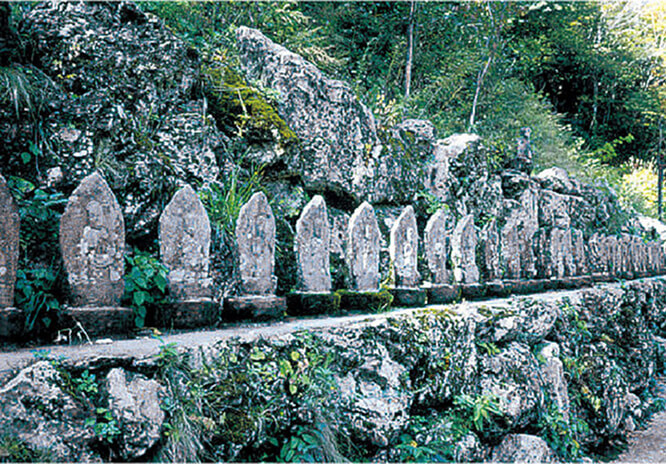
  • Sanjūsan Kannon(Thirty-Three Kannon Statues)

    Approx. 3 minutes on foot from the Shirahone Onsen Tourist Information Center

    These thirty-three Kannon statues are said to have been erected in the Edo period by devotees among the therapeutic bathers who experienced the miraculous healing powers of Shirahone Onsen's waters. Visitors from regions such as the Ina Valley, Mikawa, and Hida are believed to have built them in gratitude for the spring's blessings—famously said to ensure that if you “soak for three days, and you won’t catch a cold for three years.”
    Though the carved inscriptions on the stone have been eroded by wind and rain, leaving many details unclear, bringing your hands together in prayer before these gently gazing Kannon figures imparts a comforting sense of having received the onsen’s healing grace.

  • Walking Path (Along the Yukawa River)

    Approx. 3 minutes on foot from the Shirahone Onsen Tourist Information Center

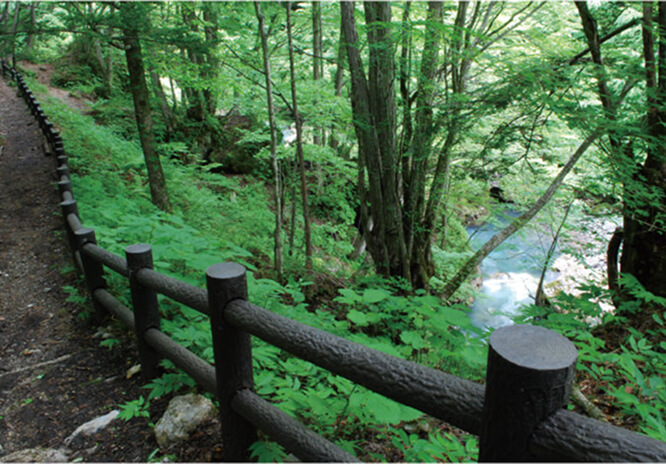
    A pleasant path of wooden boardwalks and stone paving—ideal for a gentle evening stroll to cool off after soaking in the onsen. Admire the grand katsura (Cercidiphyllum) trees bursting with spring buds or ablaze in autumn colors, while attuning your ear to the pure rush of the Yukawa River. Cross the suspension bridge for sweeping views of Tsuitōshi (the natural rock tunnel) and Kansui Gorge.
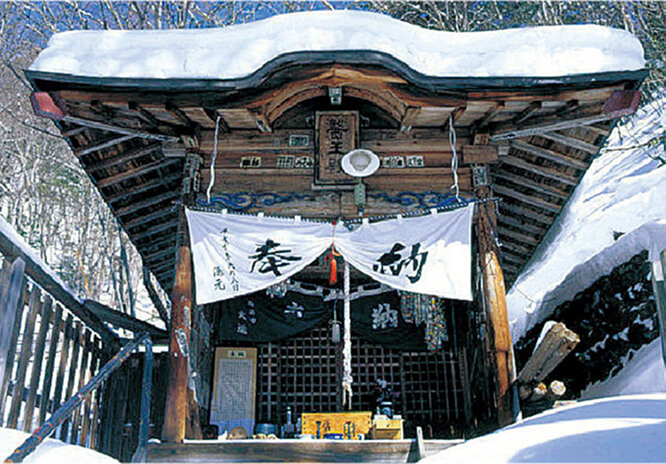
  • Yakushi Hall

    Approx. 15 minutes on foot from the Shirahone Onsen Tourist Information Center

    Built in the Edo period (1702), this hall is still affectionately known as Oyakushi-sama.
    At Shirahone Onsen it is also called Iōden (Hall of the Medicine King), a name that plays on the sulfur in the hot springs and the healing arts.
    Yakushi Nyorai is revered as the great physician of the Buddhist world, believed to alleviate illness, injury, poverty, and grant longevity.
    Since the Edo period, many visitors to Shirahone Onsen have prayed here for health and recovery.

  • Tsuitōshi & Kansuikei Gorge

    Approx. 10 minutes on foot from the Shirahone Onsen Tourist Information Center

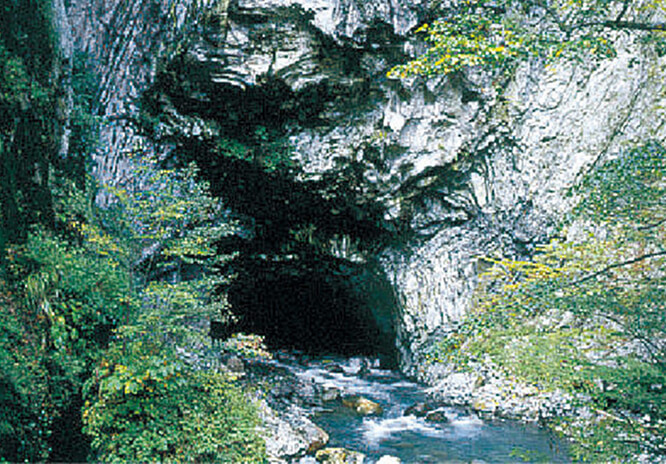
    Tsuitōshi is a natural tunnel formed where the fast-flowing waters of the Yugawa River have eroded limestone over time. It measures about 6 meters high and 20 meters long. The sight of river water roaring straight through solid rock speaks to the immense power of nature.
    From Ryujin Falls, follow the wooden walkway down to a suspension bridge over the Yugawa River. This area is known as Kansuikei. The scenery of the Yugawa gorge is especially striking, and in autumn the vivid colors of the leaves are reflected on the surface of the water.
    The view of Tsuitōshi from the bridge is impressive. While entry into the tunnel is not permitted, visitors can take time to appreciate the natural form shaped by the river.
    A bus stop is located above the cliff, and upstream is the Shirahone Hot Springs Public Open-air Bath.

  • Walking Trail (Konashidaira Course)

    Approx. 3 minutes on foot from the Shirahone Onsen Tourist Information Center

    From the parking area to Konashidaira, the walk takes about 30 minutes at a relaxed pace (about 20 minutes on the way down).
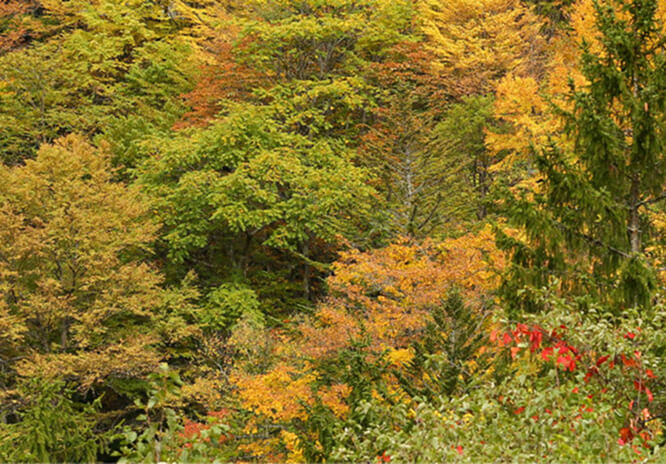
    In autumn, the trail passes through beech and oak forests scattered with acorns and horse chestnuts. Beyond the trees, an open landscape of white birch and dwarf bamboo spreads out before you.

    Spring, when the konashi trees bloom with white flowers, is also highly recommended.
    Please wear comfortable, sturdy walking shoes.

  • Ryujin Waterfall

    Approx. 2 minutes on foot from the Shirahone Onsen Tourist Information Center

    Ryujin Waterfall lies just off the road toward Sawando Onsen, a short walk downhill from the tourist information center.
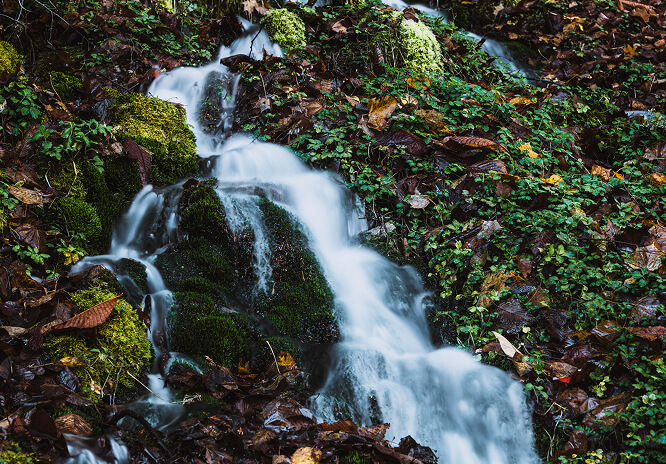
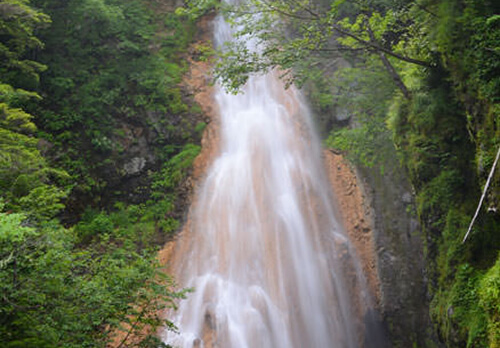
    Thin streams of water flow like white threads over moss-covered rock, creating a peaceful and beautiful scene.
    The waterfall shows different expressions with each season. Early spring, with fresh greenery and melting snow, and autumn, when colored leaves sway above the water, are recommended.

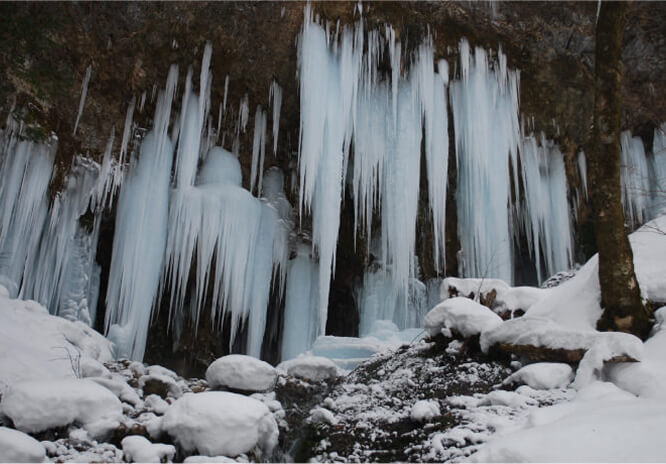
  • Ryujin Waterfall – Icicles

    Approx. 2 minutes on foot from the Shirahone Onsen Tourist Information Center

    Shirahone Onsen lies at an elevation of about 1,400 meters. In winter, snow accumulates throughout the area, and from January to February, icicles can be seen in many places.

  • Observation Deck

    Just before the tunnel leading from Shirahone Onsen toward Norikura Kogen

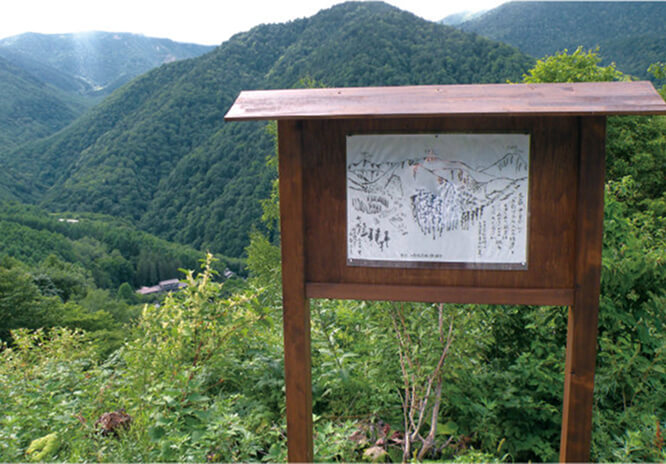
    From this viewpoint, the quiet hot spring town of Shirahone Onsen can be seen below, nestled among grand surrounding mountains.

  • Drinking Spring (Onsen Water)

    In front of Shintaku Ryokan and In front of Awanoyu Ryokan

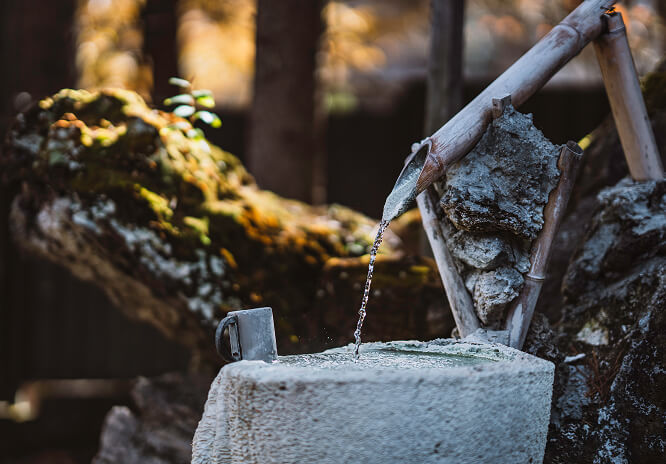
    Shirahone Onsen has two drinking fountains. Visitors are welcome to stop by during a walk, enjoy drink on the spot, or take the water home in their own bottle.
    Since ancient times, the waters of Shirahone Onsen have been said to be beneficial for the stomach and digestive system.
    Some regular visitors even collect water directly from the springs at individual inns for drinking.

Links