

I begin writing of the onsen at Shirahone—
entering the day before Autumn begins,
I am greeted by pampas grass. Yosano Akiko

About the Hot Springs

The Origin of the Name 'Shirahone'

The waters of Shirahone Onsen are said to have been flowing for about 30,000 years.

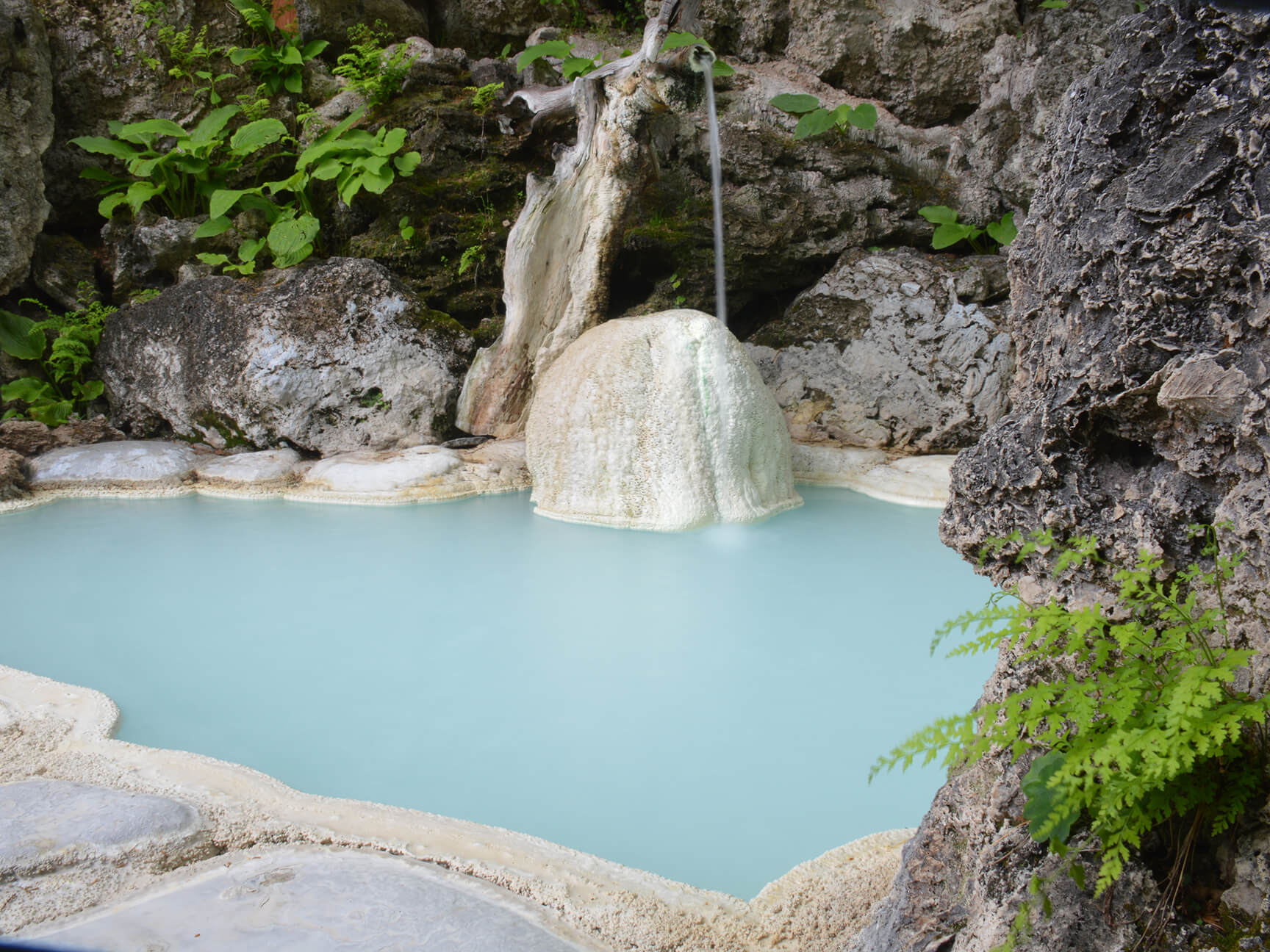
Where hot spring water emerges, calcium carbonate—one of the spring's mineral components—solidifies into limestone deposits. Layer upon layer, these formations have accumulated over time, creating what is known as funtokyū, or hot spring mounds.

In the past, the area was also known as Shirafune "White Boat". However, during the Taishō period, the writer Kaizan Nakazato referred to this place as Shirahone Onsen in his epic novel Daibosatsu Tōge. From this point on, the name Shirahone became firmly established.

(Taking up his walking staff again, he noticed the characters "白骨" written on the ground.
How remarkably vivid and blue those characters appeared—they gleamed as if gathering the light of jade, and as Ryunosuke gazed at the letters, the girl said,
"You mustn't read that as 'Hakkotsu'—it should be read as 'Shirahone.'"
"Does it matter either way?"
"No, you must read it as 'Shirahone,' or it would be wrong."
“The Shirahone Chapter,” Daibosatsu Tōge by Kaizan Nakazato

Characteristics of the Hot Springs

The Ever-Changing Expressions of the Water

All hot springs at Shirahone Onsen flow directly from their natural sources.
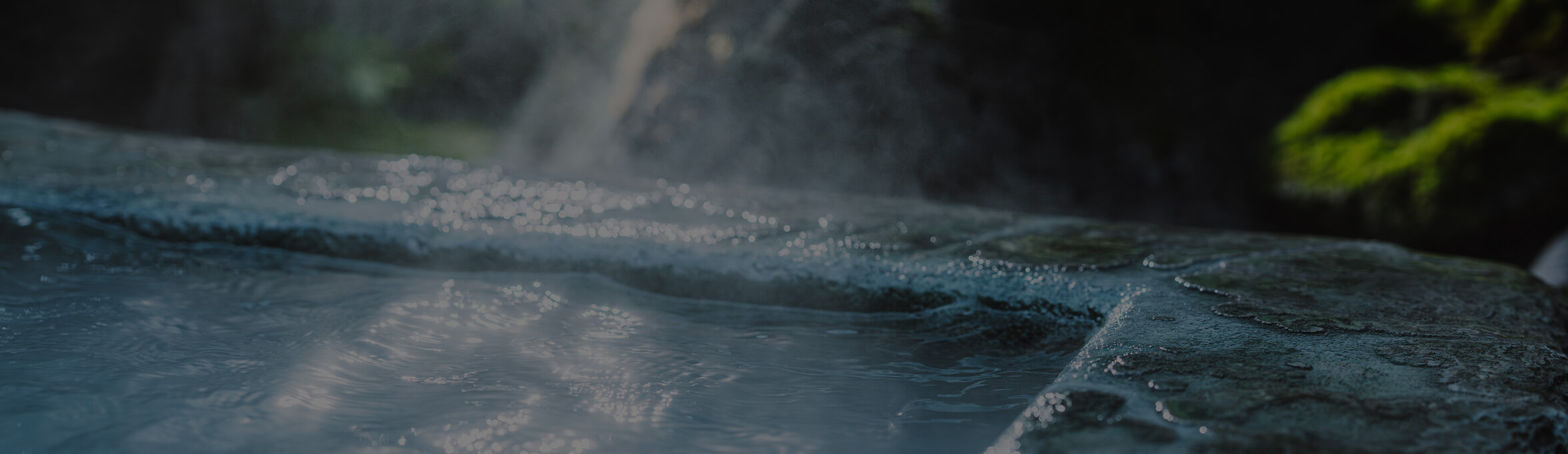
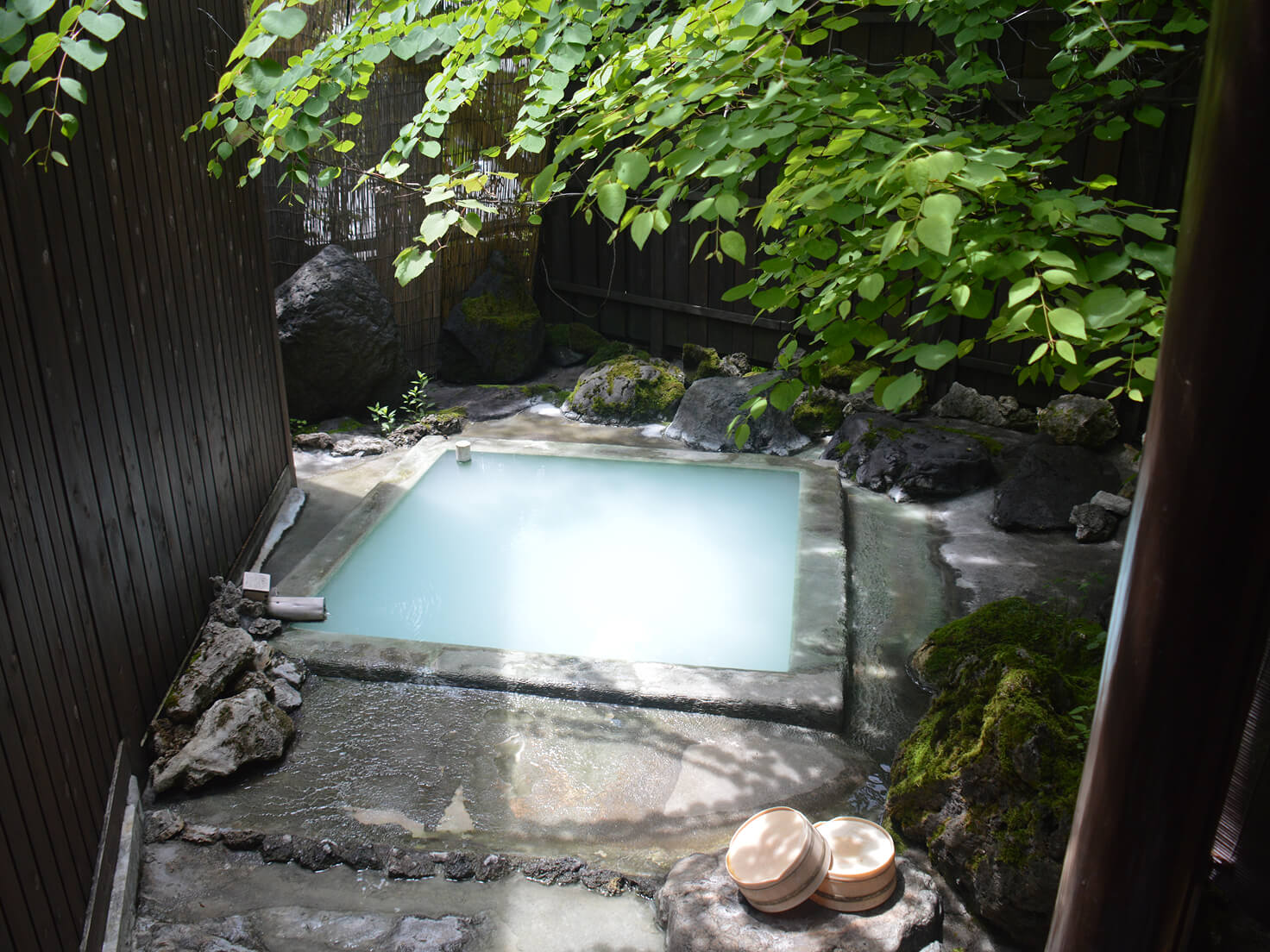
When the water first emerges, it is clear. Upon contact with air, hydrogen sulfide transforms into fine sulfur particles, and calcium bicarbonate becomes calcium carbonate. This natural process gradually turns the water milky white.
Through this natural process, the water gradually turns a beautiful milky white.
While milky-white hot springs are typically strongly acidic, the waters of Shirahone Onsen are close to neutral and only mildly acidic.
Silky smooth to the touch, the water is gentle on the skin of everyone—from small children to the elderly.

Health Benefits of the Waters

Soak for three days,
you won't catch a cold for three years.

Since ancient times, Shirahone Onsen has been known as a place where if you "soak for three days, you won't catch a cold for three years".
The waters are believed to be especially beneficial for internal ailments and nervous stress, particularly digestive disorders.
The poet Bokusui Wakayama, who suffered from gastrointestinal illness, held Shirahone Onsen in deep affection.
He visited repeatedly as a place for therapeutic bathing and left behind travel writings describing his stays.

"If time allows, I would like to climb up again this autumn.
Summer is said to be best—when visitors also come from Tokyo, offering conversation partners, the innkeepers would say repeatedly.
Yet I think it may be more characteristic of Shirahone to hear the Ina folk songs sung by crowds packed together like potatoes being washed.

At times, the place is said to be bustling with Alpine climbers as well.
What I have in mind, instead, is this: from mid-October, when all of that fades away, until mid-November, when the snow begins to fall lightly, I would like to soak quietly in these otherworldly waters.

Of course, with a generous supply of whisky and a few good tins of food at hand.
Kamikōchi lies four ri (about 16 km) away, and Hirayu in Hida six ri (about 24 km)—both hot springs encircling Mount Yakedake, embraced by snow.

"Shirahone Onsen", Minakami Travel Notes by Bokusui Wakayama

How to Enjoy the Hot Springs

The secret to fully enjoying the hot springs is to take your time and enjoy the water.
We will introduce you to a method of bathing that is known to support recovery from chronic illness and promote overall health.
Please use this as a reference and experience the benefits for yourself.

  1. Begin with kakeyu, pouring hot spring water over your body in this order: legs, arms, then stomach.

    This encourages circulation beneath the skin and helps prevent sudden increases in blood pressure or lightheadedness.

  2. Relax and soak in lukewarm water.

    The scent of the hot springs and the surrounding scenery help you unwind and bring balance to both body and mind.

  3. Move away from the water outlet and stretch out your body.

    As muscle tension eases, a steady sense of calm enhances the effects of the hot springs.

  4. As a general guideline, soak for about 15 minutes in lukewarm water or about 5 minutes in hot water.

    Please be mindful of the strain water pressure can place on the heart.

  5. After bathing, do not rinse your body with fresh water.

    Washing away the minerals left on the skin reduces the benefits of the hot springs.

  6. After your bath, rest for at least 30 minutes.

    This helps prevent fatigue and allows the relaxing effects of the hot springs to deepen.
    Remember to stay well hydrated.

  7. Please limit bathing to no more than three times per day.

    Bathing too often may lead to fatigue. This amount is gentle on your body.

Drinkable Hot Springs

Enjoying the Waters Through Taste

The waters of Shirahone Onsen are safe to drink directly from the source.
By taking in the white sulfur and carbonated minerals directly, blood flow and function of the digestive organs improve, and the water is said to be effective in relieving constipation.
To make this experience available to everyone, two drinking fountains are provided within the area.

As each inn has its own hot spring source, each source has its own distinctive character.
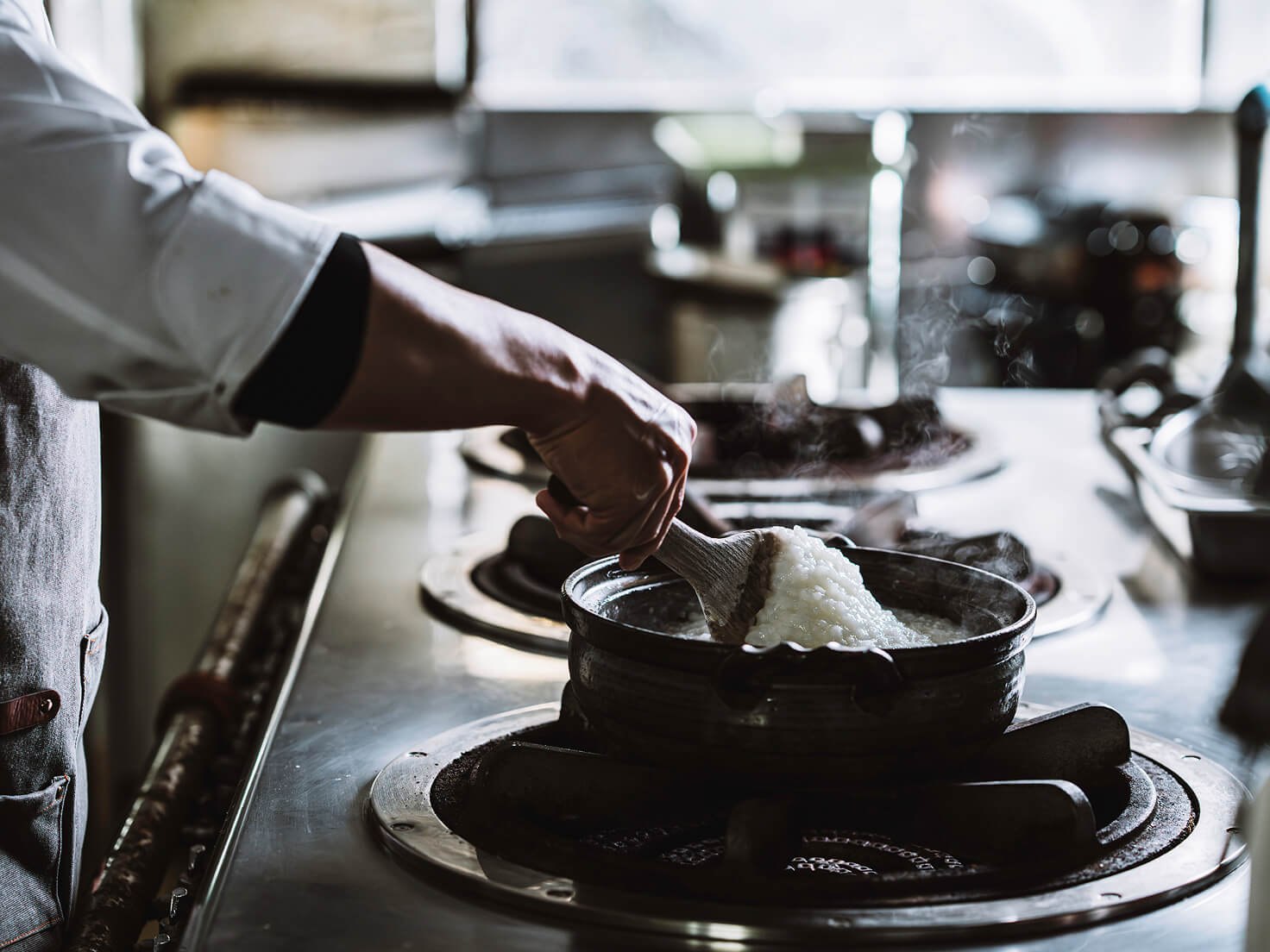
Onsen-gayu, rice porridge cooked using hot spring water, is a local specialty of Shirahone Onsen.
Originally a home-style regional dish, it came to be served to guests with sensitive stomachs and gradually became a well-known specialty.
Enjoy its gentle, mellow flavor—quite different from drinking the water itself.